Emerald Cut Diamond Engagement Rings: The Complete 2026 Buying Guide

Emerald cut diamond engagement rings are chosen by people who understand quiet luxury. Unlike brilliant cuts that sparkle in fast flashes, the emerald cut reflects light in clean, mirror-like steps. Its beauty is more architectural, more composed and often more sophisticated. In 2026, this makes the emerald cut especially relevant: buyers want rings with personality, timelessness and a less predictable kind of glamour.
At Zizov Diamonds, emerald cut diamonds appeal to clients who love clarity, symmetry and calm elegance. The shape works beautifully as a solitaire, with a hidden halo, in pavé designs or as part of a bespoke engagement ring created around a specific hand and personal style.
00. Why Emerald Cut Rings Stand Out
The emerald cut stands out because it does not try to compete for the loudest sparkle. Its appeal is restraint. The long rectangular facets create a hall-of-mirrors effect, revealing the inner structure of the diamond rather than hiding it behind intense scintillation. This makes the shape feel elegant, intelligent and deeply refined.
Buyers who choose emerald cuts often want a ring that feels classic but not ordinary. Explore Zizov’s Natural Emerald Cut Diamond Collection or compare modern alternatives through the Lab-Grown Emerald Cut Diamond Collection.
The Zizov View
An emerald cut is not forgiving in the same way as a brilliant cut. It rewards precision: better clarity, balanced ratio, strong symmetry and a setting that lets the step facets breathe.
01. What Is an Emerald Cut Diamond?
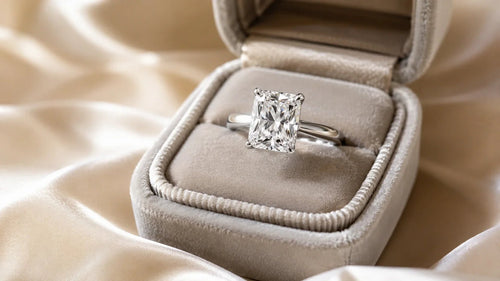
An emerald cut diamond is a rectangular step-cut diamond with cropped corners. Instead of triangular brilliant facets, it uses long, parallel facets that create broad flashes of light. This gives the diamond a cleaner, more architectural appearance than round, oval or radiant cuts.
The shape was originally associated with emerald gemstones, but in diamonds it has become a symbol of refined taste. Because the facets are open and transparent, the stone’s clarity and cut quality are especially important. The emerald cut reveals; it does not disguise.
02. Ratio & Proportions
Shape Balance
The ratio of an emerald cut affects the entire personality of the ring. A slightly shorter emerald can feel balanced and classic. A longer emerald cut feels more elegant, finger-lengthening and dramatic. There is no single perfect ratio because hand shape, setting and personal taste all matter.
Many buyers prefer a rectangular emerald cut with a graceful elongated look, but extremely long stones can feel severe if the setting is not balanced. A private consultation is valuable because the same carat weight can look completely different depending on spread, depth and ratio.

03. Clarity, Colour and Step-Cut Facets
Clarity is especially important in emerald cut diamonds because the open step facets make inclusions easier to see. A round brilliant or radiant cut can hide small inclusions through sparkle. An emerald cut is more transparent. That does not always mean you need the highest clarity grade, but it does mean the inclusion placement must be carefully checked.
Colour also appears differently in emerald cuts. Because the facets are broad and calm, warmer tones can be more noticeable than in high-scintillation shapes. In platinum or white gold, many buyers prefer a higher colour grade for a crisp icy look. In yellow gold, a slightly warmer diamond may still feel elegant and intentional.
An emerald cut is a window. Choose one that looks clean, balanced and alive from every angle.
04. Best Settings for Emerald Cuts
Emerald cut diamonds pair best with settings that respect their geometry.
Emerald cut solitaire
A solitaire lets the clean rectangular outline speak clearly. Zizov’s 0.70 CT Classic Emerald Cut Solitaire shows how elegant a minimal design can be when the stone is well selected.
Under-halo emerald cut
An under-halo adds subtle sparkle from the side without disturbing the top view of the stone. This works beautifully with emerald cuts because it preserves the clean face-up geometry. See the 0.80 CT Under-Halo Emerald Cut Solitaire.
Emerald cut pavé
A pavé band adds brilliance around the quiet centre stone. It is a strong choice if you want contrast: calm step-cut reflections in the centre with smaller diamonds adding sparkle on the band. Zizov’s 0.50 CT Emerald Solitaire Pavé Ring is a good example.
Emerald cut halo
A halo can make an emerald cut appear larger and more decorative, but it must be refined. Too much pavé can interrupt the shape’s elegance. A slim halo or hidden halo often feels more sophisticated than a heavy classic halo.
05. Best Metals
Platinum and white gold emphasise the emerald cut’s icy, architectural personality. Yellow gold creates a warmer vintage feeling and can make the step-cut shape appear softer. Rose gold adds romance but should be chosen carefully, especially if the wearer prefers a very crisp diamond appearance.
If you are unsure, compare the same emerald cut style in different metals during a consultation. Metal tone affects not only colour perception, but the entire mood of the ring. For a deeper comparison, see our 18k vs 14k vs platinum guide.
06. Natural vs Lab-Grown Emerald Cut
A natural emerald cut diamond carries geological rarity and a timeless heirloom identity. A lab-grown emerald cut diamond can offer larger size or higher specifications for the same budget. Both can be elegant, but buyers must understand the difference in origin, value and long-term market identity.
Emerald cuts are especially attractive in lab-grown diamonds because buyers can often access higher clarity and larger dimensions. However, because the emerald cut reveals inclusions and proportions so clearly, certification and expert selection still matter. Our Diamond Certification Guide explains what to check before buying.
07. Emerald vs Asscher
Emerald and Asscher cuts are both step cuts, but they feel different. Emerald cuts are rectangular and lengthening, while Asscher cuts are square, more compact and often more vintage in character. If you are deciding between the two, read our full comparison: Emerald vs Asscher.

08. Buying Checklist
Before choosing an emerald cut engagement ring, review the following:
- Ratio: Does the length-to-width proportion feel balanced on the hand?
- Clarity: Are inclusions visible through the open step facets?
- Colour: Does the diamond look crisp in the chosen metal?
- Symmetry: Are the steps even and visually calm?
- Cut quality: Does the stone reflect with life, not flatness?
- Setting: Does the design respect the emerald cut’s clean outline?
- Certification: Is the diamond properly documented?
- Hand presence: Does the stone’s length and width flatter the wearer?
The best emerald cut is not the one with the loudest sparkle. It is the one with the clearest presence, strongest symmetry and most elegant proportions.
09. Emerald Cut Summary Table
| Feature | What to Know | Zizov Advice |
|---|---|---|
| Facets | Long step facets and mirror-like reflections | Choose for quiet luxury, not maximum sparkle. |
| Clarity | Inclusions are easier to see | Inspect the stone carefully in person. |
| Ratio | Can feel classic, elongated or dramatic | Judge the shape on the hand, not only on paper. |
| Best settings | Solitaire, under-halo, pavé, refined halo | Keep the design clean enough to honour the shape. |
| Best buyer | Someone who values elegance and restraint | Perfect for timeless, sophisticated engagement rings. |
10. Expert FAQ
Are emerald cut engagement rings popular in 2026?
Yes. Emerald cut engagement rings remain popular because they offer quiet luxury, timeless geometry and a sophisticated alternative to more sparkly brilliant-cut shapes.
Do emerald cut diamonds sparkle?
Emerald cut diamonds sparkle differently from brilliant cuts. They produce broad, mirror-like flashes rather than fast scintillation. Their beauty is more about clarity, symmetry and elegant reflection.
What clarity is best for an emerald cut diamond?
Because emerald cuts have open step facets, clarity is more important than in many brilliant cuts. The best choice is an eye-clean stone where inclusions do not distract from the diamond’s clean reflections.
What setting is best for an emerald cut engagement ring?
Solitaire, under-halo, pavé and refined halo settings all work well. The best setting is one that protects the stone while preserving the emerald cut’s clean rectangular outline and quiet elegance.
Should I choose a natural or lab-grown emerald cut diamond?
Choose a natural emerald cut diamond if rarity, geological origin and heirloom identity matter most. Choose a lab-grown emerald cut diamond if you want larger size or higher specifications for the budget. In both cases, certification and expert selection are essential.
Choose Your Emerald Cut Diamond Ring
Whether you prefer a classic emerald solitaire, an under-halo design, a pavé band or a bespoke emerald cut engagement ring, our Antwerp showroom can help you compare clarity, ratio and setting with confidence. Explore our Natural Emerald Cut Diamond Collection, compare Lab-Grown Emerald Cut Diamonds, or begin a bespoke commission.
Book Emerald Cut ConsultationZizov Diamonds Antwerp
Excellence in every facet.