The Wedding Band Guide: Choosing the Perfect Ring for Him & Her

The engagement ring receives all the attention — the research, the planning, the anxiety. And then, some months later, quietly and often belatedly, the wedding band. It is the ring that will be worn every single day for the rest of a life — often without the engagement ring, which goes into a box on the worktop during cooking, into a drawer before sport, and onto the nightstand before sleep. The wedding band deserves the same considered attention its partner received. At Zizov Diamonds, we commission as many wedding bands as we do engagement rings — and the decisions involved are equally nuanced. This guide covers everything for both partners: her band, his band, how they relate to each other, and how to choose both with the same intelligence applied to the stone that preceded them.
01. Engagement Ring vs. Wedding Band — The Distinction
The engagement ring is given before the wedding as a statement of intention. It typically features a prominent centre stone and is worn on the ring finger of the left hand in most of Western Europe. The wedding band is exchanged during the marriage ceremony itself — the physical object of the vow — and is generally simpler in design. Traditionally, the wedding band is worn closest to the heart (below the engagement ring on the finger), with the engagement ring sitting above it.
In 2026, the distinction has blurred productively. Some couples choose a single statement band with diamond detail as both their engagement and wedding ring. Others commission a bespoke bridal set — an engagement ring and matching band designed as a single system from the start, shaped and proportioned to sit perfectly together. Still others wear only the wedding band daily and store the engagement ring for occasions. All of these are valid approaches. The right choice is the one that fits how you actually live, not how you think you are supposed to live.
02. Her Wedding Band
Option 1: Plain Precious Metal Band
The purest, most classical choice. A 2–3mm yellow gold, rose gold, or platinum band in a court (domed) profile. Simple, elegant, and lets the engagement ring be the visual focus. Excellent for women with very active lifestyles who need a band that can withstand daily wear without any protruding settings. Ideal also if she occasionally wears the band alone — a plain band is a complete, beautiful object independently.
Option 2: Diamond Pavé Band
A continuous line of micro-pavé diamonds set flush into the band surface. This is the most popular choice for women who want the wedding band to be visually present alongside the engagement ring — the combined sparkle of both creates a more dramatic overall effect. A half-pavé band (diamonds on the top half only) is more practical for active wear; a full-circle pavé delivers maximum brilliance but cannot be easily resized. See our diamond eternity band collection and our complete eternity band guide.
Option 3: Shaped / Contour Band
A band with a curved or notched profile designed to follow the exact silhouette of the engagement ring setting, sitting flush against it with no gap. This is the most technically satisfying solution for a cohesive stacked look, and is particularly important for rings with prominent settings (halo, oval solitaire) where a straight band would sit awkwardly alongside the stones. Our bespoke service designs contour bands to match any existing engagement ring precisely.
03. Stacking & The Engagement Ring Match
The single most important consideration when choosing a wedding band for a woman is how it will coexist with her existing engagement ring. The guiding principle: they should feel intentional together, not accidental. This does not require them to be identical — in fact, identical metals and styles can look monotonous. The better goal is visual compatibility.
Stacking Compatibility Guide
Round solitaire in platinum: A classic straight platinum or white gold pavé band. Alternatively, a warm yellow gold plain band for a modern mixed-metal contrast — a strong 2026 choice.
Oval solitaire in yellow gold: A shaped contour band that follows the oval setting's curve, in matching yellow gold. Or a straight plain band worn with a deliberate visual gap — both work. See our oval ring guide for stacking specifics.
Halo ring: A shaped or notched band that sits below the halo frame without any gap. A straight pavé band worn against a halo creates a visible gap that most buyers find unsatisfying — a contour is strongly recommended.
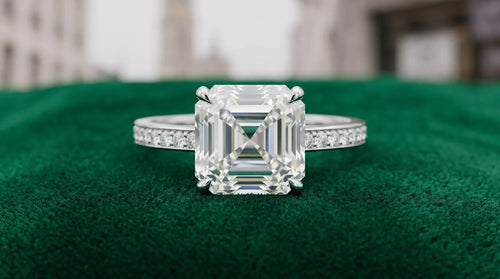
Step-cut (Emerald, Asscher): A straight tapered baguette band complements the geometric precision of step-cuts beautifully. Or a simple plain band that lets the elegant geometry of the engagement ring speak alone. See our step-cut guide.
For the complete stacking philosophy, see our fine art of stacking guide.

04. His Wedding Band
The men's wedding band is among the most carefully considered jewellery purchases a man will ever make — partly because many men have never worn a ring before and have no reference for what "comfortable daily wear" actually means. It is worn every day, in every context: the boardroom, the gym, the kitchen, the garden. It must be practically indestructible while being visually beautiful and completely comfortable.
Width — The First Decision
Width is the most visible characteristic of a men's band. Our recommendations by hand size:
| Hand Size | EU Ring Size | Recommended Width | Character |
|---|---|---|---|
| Small / slim | EU 55–60 | 3–4mm | Elegant, understated |
| Average | EU 61–66 | 4–6mm | Classic proportions — most popular |
| Large / broad | EU 67+ | 6–8mm | Substantial presence, bold statement |
Profile — Comfort Fit vs. Flat
The most important practical decision for a men's band is the interior profile. A flat interior (standard) has a precise, squared internal bore. A comfort fit has a gently curved interior surface that sits over the knuckle more easily and creates significantly less friction during all-day wear. For any man who is not accustomed to wearing rings, comfort fit is essential — the ring goes on and comes off with far less resistance, and the difference in daily comfort is significant. We specify comfort fit as standard on all men's bands at Zizov.
Finish Options
- High polish: Mirror-bright finish. The most formal and traditionally jewellery-like. Shows scratches more visibly over time.
- Brushed / satin: Softly matte, directional texture. The most popular finish in 2026 — it ages beautifully and scratches integrate naturally rather than standing out. Our default recommendation for active lifestyles.
- Mixed: Polished sides with a brushed top surface, or vice versa. Creates texture and visual interest without committing fully to either aesthetic.
- Hammered: An organic, irregular texture created by hand tools. Unique to each ring — no two are identical. Beautiful for buyers who want something visually distinctive.
Diamond Accent Bands for Men
The men's diamond band — a pavé or channel-set line of diamonds running across the top surface — is a growing category in 2026, connected to the broader expansion of men's fine jewellery. A bezel-set round brilliant flush with the band surface, or a row of three to five flush-set stones, adds a subtle but unmistakable quality detail. Our bespoke service creates these to exact specifications.
05. Metals for Daily Wear
Wedding bands are subjected to the most demanding daily wear of any jewellery category. Metal choice matters more than for an engagement ring because the band is worn continuously in contexts where the engagement ring might be removed. Our complete metals guide covers all alloys in full detail. The specific context of wedding bands:
| Metal | Daily Wear Rating | Maintenance | Best For |
|---|---|---|---|
| Platinum 950 | Excellent | Develops patina — polish to restore shine | Lifetime durability, hypoallergenic |
| 18k Yellow Gold | Very Good | Polishes well, retains colour permanently | Warmth, classic character, 2026 trend |
| 18k Rose Gold | Very Good | Minimal — the copper alloy is harder than YG | Romantic warm tone, distinctive character |
| 18k White Gold | Good | Rhodium re-plate every 1–2 years | Cold white aesthetic matching platinum |
| 14k Gold | Excellent | More durable than 18k due to alloy ratio | Active lifestyles, harder wearing |
06. Matching Sets vs. Individual Choices
Whether to match or diverge is one of the most personal wedding band decisions. There is no right answer, but there is a useful framework:
Matching bands — same metal, same width, same finish — communicate unity and create a beautiful visual connection when hands are held. They are particularly meaningful for couples who want the rings to function as a visible pair. The matching set has a long tradition and remains popular for very practical reasons: it requires fewer decisions and the result is always cohesive.
Non-matching bands — where each partner chooses independently according to their own aesthetic, lifestyle, and preferences — have become increasingly common in 2026 and reflect a different but equally valid value: the idea that marriage joins two distinct individuals rather than erasing individual identity. The only design guideline for non-matching bands: they should share at least one element (metal colour, for example) so that they look like a considered choice rather than a random pairing.
"The wedding band is the ring that stays on. Choose it as if it will be there every day for sixty years — because it will."
07. Engraving — The Hidden Message
The interior of a wedding band is one of the most intimate spaces in all of jewellery — invisible to the world, known only to the wearer and their partner. The tradition of engraving the inside of wedding bands with initials, dates, or personal messages is centuries old and remains deeply meaningful.
What to Engrave
- Initials + date: "A&M — 12.06.2026" — the most classic format. Clear, permanent, and unambiguous.
- A line that is only yours: A private phrase, a line from a song, the first words spoken — anything that carries meaning specific to the relationship and would be recognisable to both of you.
- Coordinates: The latitude and longitude of a meaningful location — where you met, where you proposed, where you will marry. Elegant and discreet.
- Nothing at all: A completely clean interior is equally valid — the ring speaks through its material and craftsmanship, not through text.
Technical Notes on Engraving
Allow at least two weeks for engraving if ordered after the ring is made — it is a separate production step. Machine engraving is precise and permanent. Hand engraving has a slightly irregular, calligraphic character that some buyers prefer for its human quality. For rings with comfort-fit interiors, note that the engravable surface area is slightly reduced by the curved profile. For bespoke commissions, engraving is incorporated into the production process from the start. Book a consultation to discuss options.
08. When to Buy & What It Costs
Wedding bands are consistently purchased later than they should be. The typical timeline: engaged for 12 months, then band shopping begins 6 weeks before the wedding, then panic. The right timeline: begin exploring bands 12 weeks before the wedding date, especially for bespoke or custom options.
| Timeline | What's Possible | Notes |
|---|---|---|
| 12+ weeks | Full bespoke commission for both bands | All options open, ideal |
| 8 weeks | Custom or semi-bespoke with engraving | Comfortable, no stress |
| 4–6 weeks | Collection bands with standard engraving | Workable but check availability |
| Under 3 weeks | Express collection options only | Engraving may not be possible |

09. Expert FAQ
What is the difference between a wedding band and a wedding ring?
The terms are interchangeable — "wedding band" and "wedding ring" mean the same thing. In common usage, "band" tends to suggest a simpler design without a prominent centre stone, while "ring" is broader. Both refer to the piece exchanged during the marriage ceremony, distinct from the engagement ring given beforehand. Browse our diamond ring collection and eternity band collection for the full range.
Should the wedding band match the engagement ring?
They should look intentional together, not necessarily identical. Sharing the metal colour creates immediate visual cohesion. Mixing metals — a yellow gold wedding band with a platinum engagement ring — is a beautiful and popular choice in 2026. For rings with elaborate settings (halo, oval solitaire), a shaped contour band that sits flush is worth the extra investment. See our stacking guide for the full principles.
How wide should a men's wedding band be?
The most popular width is 4mm to 6mm. 4mm reads elegant and understated; 6mm is the classic "wedding band width" that communicates clearly as a ring without feeling heavy. For larger hands (EU 67+), 6mm to 8mm carries proportional presence. The right width is ultimately felt more than calculated — which is why trying widths on the actual hand at our Antwerp showroom before ordering is our strong recommendation. Book a try-on appointment.
When should we buy our wedding bands?
Aim to order at least 8 weeks before the wedding date — 12 weeks for bespoke commissions. This allows comfortable time for sizing confirmation, production, engraving, and one round of adjustments if needed. Never leave it later than 6 weeks. For urgent situations, see our express delivery collection. Book a consultation at our showroom to establish the realistic timeline for your specific requirements.
Can a wedding band be worn without an engagement ring?
Absolutely. Many people wear only their wedding band daily and store the engagement ring for special occasions — particularly those with active or hands-on lifestyles. Others wear the wedding band alone professionally and add the engagement ring socially. The wedding band is a complete symbolic and aesthetic object in its own right. A well-chosen diamond band or beautiful plain gold band worn alone has its own quiet authority.
What is a comfort fit wedding band?
A comfort fit band has a gently curved interior surface, rather than a flat bore. The curve makes the ring significantly easier to slide on and off over the knuckle and much more comfortable for continuous all-day wear. For anyone not accustomed to wearing rings, comfort fit is essential — the difference between flat and comfort fit feels trivial in a jeweller's hand but becomes significant after twelve hours of daily wear. We specify comfort fit as standard on all men's wedding bands at Zizov. Note: comfort fit requires ordering the ring approximately half a size larger than your standard measurement.
Choose Your Wedding Bands
Browse our diamond eternity bands, full ring collection, and new arrivals. Read our eternity band guide, metals guide, and stacking guide. Then book a wedding band appointment at our Antwerp showroom — we show both partners' options together and help you understand how they relate to the engagement ring before any decision is made. For a bespoke matching set, allow 12 weeks from first consultation to delivery.
Book Wedding Band AppointmentZizov Diamonds Antwerp
Excellence in every facet.