Pavé vs. Channel vs. Tension Settings: Structural Differences Explained

While the center diamond naturally commands the most attention, the band is the architectural foundation of your engagement ring. How the accent diamonds are set into that metal determines not only how much the ring will sparkle, but how well it will hold up to decades of daily wear.
At Zizov Diamonds, clients often ask how to balance breathtaking brilliance with practical durability. In 2026, the three most prominent techniques for band design are pavé, channel, and tension settings. Each employs a radically different structural method to secure the stones. This guide breaks down the engineering behind the aesthetics.
00. The Importance of the Band
The band undergoes more physical stress than any other part of the ring. It grips the finger, knocks against steering wheels, and rubs against door handles. The setting you choose dictates whether your accent diamonds are exposed to this friction or safely tucked away within the metal.
The Zizov View
Never choose a setting based on photos alone. You must align the structural reality of the band with your lifestyle. An active wearer will quickly ruin a micro-pavé band, while a channel setting will survive beautifully.
01. Pavé Settings: Maximum Brilliance
The Glittering Ribbon
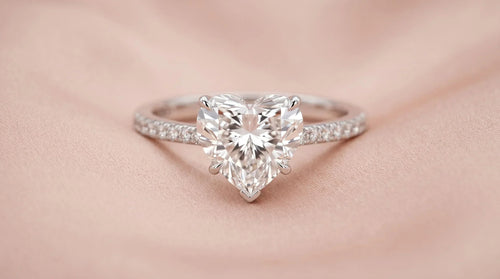
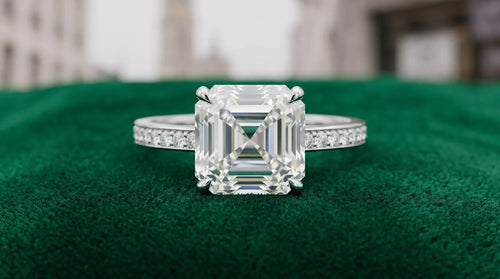
The word *pavé* (pronounced pah-vay) comes from the French word for "paved." In this setting, the band is paved with tiny diamonds, creating a continuous surface of sparkle.
Structurally, holes are drilled into the metal band. The small diamonds are placed into these holes, and the jeweler uses a specialized tool to push tiny beads of the surrounding metal over the edges of the diamonds to hold them in place. Because there is minimal metal covering the stones, light reflects off them from almost every angle, a feature often highlighted in our Halo Collection.

02. Channel Settings: Sleek Security
If pavé is about exposure, the channel setting is about protection. In a channel setting, a track (or channel) is carved directly into the metal band. The diamonds are placed tightly next to each other inside this groove, and the upper lips of the metal channel are folded down over the edges of the stones to secure them.
Structurally, there are no prongs. The diamonds sit flush with, or slightly below, the surface of the metal. This makes the channel setting incredibly smooth to the touch. It will never catch on clothing, and the edges of the diamonds are fully protected from impact.
03. Tension Settings: Modern Illusion
The tension setting is a feat of modern engineering. Rather than using prongs, beads, or channels, this setting uses the natural tensile strength of the metal band itself to grip the center diamond. The diamond appears to be floating in mid-air, squeezed between the two ends of the open band.
Structurally, the metal is heavily work-hardened, and tiny grooves are cut into the inner edges of the band where the diamond's girdle rests. The metal acts as a high-pressure spring. While it looks delicate and precarious, a true tension setting is actually incredibly secure—but it can only be resized with extreme difficulty, if at all.
04. Pros & Cons (Customer Insights)
Here is what our clients in the Antwerp showroom experience after wearing these settings daily:
- Pavé Pro: Unmatched brilliance; the band looks like a solid line of diamonds.
- Pavé Con: High maintenance. The tiny prongs can bend or wear, leading to lost stones over time.
- Channel Pro: Extremely secure and smooth. Won't snag on sweaters or scratch surfaces.
- Channel Con: Harder to clean, as dirt can get trapped in the groove beneath the diamonds.
- Tension Pro: A stunning, modern aesthetic that allows light to pass entirely through the center stone.
- Tension Con: Nearly impossible to resize accurately if your finger size changes in the future.
Design is how it looks. Architecture is how it lasts. The best engagement ring marries both.

05. Summary Table
| Feature | Pavé Setting | Channel Setting | Tension Setting |
|---|---|---|---|
| Security | Moderate. Requires care. | Very High. Edges protected. | High, but complex. |
| Light Return | Exceptional (max exposure). | Good (top reflection only). | Exceptional (full exposure). |
| Maintenance | High. Prongs need checking. | Low. Easy daily wear. | Low, but resizing is tough. |
| Best For... | Glamour and maximum sparkle. | Active lifestyles and safety. | Modern, minimalist art lovers. |
06. Expert FAQ
Will diamonds fall out of a pavé band?
It is possible. Because the metal beads holding the diamonds are so small, heavy impacts or gripping hard objects (like weights at the gym) can bend the metal, causing a tiny stone to fall out. Regular check-ups are required.
Is a channel setting outdated?
Not at all. While highly popular in the 1990s, the channel setting has seen a massive resurgence in 2026 among buyers who want clean, sleek, architectural lines without sacrificing everyday durability.
Can any diamond be put in a tension setting?
No. Because of the immense pressure the metal applies to the stone, only diamonds (and sometimes rubies or sapphires) with high clarity and no structural vulnerabilities (like large feathers or surface-reaching inclusions) can be used, otherwise the stone might crack under the pressure.
Find Your Structural Perfect Match
Whether you desire the continuous sparkle of pavé, the sleek safety of a channel, or the modern edge of a tension setting, our experts can guide you. Book a consultation at our Antwerp showroom or start crafting your bespoke foundation today.
Book Your ConsultationZizov Diamonds Antwerp
Excellence in every facet.