The Gold Standard: 18K vs. 14K vs. Platinum — Which Metal Is Right for You?
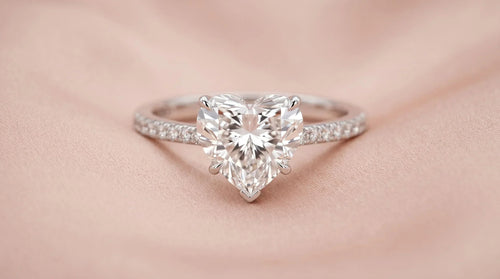
 From the cool tones of Platinum to the warmth of 18k Yellow Gold.
Choosing a diamond is only half the battle. The metal that holds it is just as important. It frames the stone, touches your skin every day, and endures the wear and tear of life. Many clients are confused by the numbers — is 18k better than 14k? Is Platinum worth the extra cost? And why does White Gold need "dipping"? In this guide, we strip away the marketing fluff and give you the metallurgical facts, so you can choose the metal that fits your lifestyle and your engagement ring.
The Purity Scale (Karats Explained)
Pure gold (24k) is intensely yellow and very soft — you can bend a 24k coin with your teeth. That is why we mix it with other metals (alloys) to make it hard enough for jewellery. The result is measured in karats.
 Carat (ct) measures diamond weight. Karat (k) measures gold purity.
| Karat | Purity | The Verdict |
|---|---|---|
| 24k | 100% Gold | Too soft for rings. Ideal for bullion investment, not daily wear. Avoid for jewellery. |
| 18k (750) | 75% Gold | The Luxury Standard. A rich, deep yellow colour that signals quality. Durable enough for daily wear while maintaining the prestige of high gold content. The standard at Zizov Diamonds. |
| 14k (585) | 58.5% Gold | The Budget Choice. Common in the US. Harder than 18k but has a paler, slightly straw-coloured look — nearly half of the alloy is cosmetic metals. Lower resale value. |
Antwerp Insight: At Zizov, we primarily work with 18k Gold (stamped '750') because the colour is superior. If you want 14k for budget reasons, we can do it — but be aware the resale value is lower and the colour noticeably less rich.
Yellow Gold: The Classic Comeback
Yellow gold is having its biggest revival since the 1980s. After two decades of white metal dominance, buyers are returning to the warmth and heritage of yellow gold — and for good reason.
18k yellow gold has a depth and richness that no other metal can replicate. It flatters all skin tones, it pairs beautifully with fancy coloured diamonds, and it photographs magnificently. It is also the most historically significant metal in fine jewellery — every piece made in Antwerp for 500 years was set in yellow gold.
For engagement rings, yellow gold creates a warm, romantic look that makes white diamonds appear to glow. It is particularly striking under the Toi et Moi and three-stone settings where the metal is part of the visual composition.
White Gold vs. Platinum (The Heavyweights)
They look identical when you buy them: shiny and silver-white. But after twelve months of daily wear, they behave completely differently.
1. White Gold (The "Imposter")
The science: White gold does not exist in nature. It is yellow gold mixed with silver or palladium to bleach it, then dipped in Rhodium (a platinum-family metal) to make it bright white.
The maintenance trap: After one to two years, the Rhodium wears off — rubbed away by skin and clothing. The ring begins to look warm or slightly yellow. You must return it to a jeweller for re-plating every 12–18 months at a cost of €50–€100 each time. Over a lifetime, White Gold is expensive to maintain.
 Rhodium plating gives white gold its shine — but it is temporary.
2. Platinum (The "King")
The science: Platinum is naturally white. It is 95% pure (stamped '950') and requires no plating — ever.
The patina: Platinum does scratch, but when it does, the metal is not lost — it is displaced (pushed aside). Over time it develops a satin finish called patina. A quick professional polish restores it to mirror finish instantly, with no chemicals required.
The security: Because platinum is dense and "sticky," it holds diamonds more securely than gold. Gold prongs wear down and become thin over decades. Platinum prongs stay strong indefinitely — critical for protecting a significant diamond ring.
 Gold loses metal when scratched. Platinum just moves it around — which is why Platinum lasts forever.
The Price Flip: Why Platinum Is a Steal Right Now
Historically, Platinum was always approximately twice the price of Gold — it is 30 times rarer and significantly harder to work with. But in 2025–2026, the calculation has shifted dramatically.
Gold prices have skyrocketed due to global economic instability, with central banks buying bullion aggressively. Platinum prices have remained comparatively stable. The result: the price gap between an 18k Gold setting and a Platinum setting is smaller than it has been in decades. In some configurations, Platinum is now actually cheaper than 18k Gold. You are paying for a technically superior, rarer metal at a moment when its relative price is at a historic low. Our Antwerp consultants can show you the current pricing side by side.
Rose Gold: The Romantic Choice
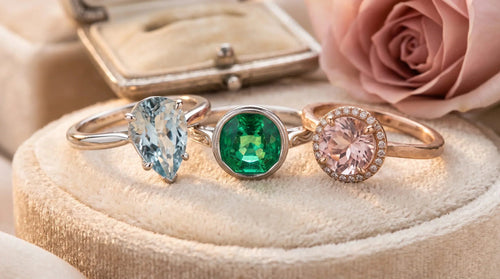
Rose gold gets its distinctive pink warmth from copper. It has become a modern classic that shows no signs of fading.
The physics: Copper is one of the hardest metals in the alloy mix, making 18k rose gold surprisingly durable — often harder than yellow gold of the same karat. It is an excellent choice for active wearers who want warmth and romance without sacrificing longevity.
The aesthetics: Rose gold flatters pale skin by adding warmth, and it creates a striking contrast against darker skin tones. It is arguably the most universally flattering metal. It also pairs beautifully with halo ring settings where the warm band frames a white diamond centre.
The vintage dimension: Rose gold often reads as antique even when brand new — it carries echoes of Victorian and Edwardian jewellery that make it feel timeless rather than trendy.
Allergies & Sensitivities
Approximately 10–20% of women are allergic to nickel. Symptoms include a red, itchy rash where the ring touches the finger — contact dermatitis that worsens with wear.
The problem: Cheap white gold frequently uses nickel as its bleaching agent because it is inexpensive. It is the most common metal allergen in the world and the leading cause of jewellery-related skin reactions.
The Zizov standard: All our jewellery complies with the strict EU Nickel Directive (REACH). We use palladium-based white gold — palladium is a platinum-family metal that is naturally hypoallergenic and more durable than nickel. For clients with severe sensitivities, Platinum 950 is the definitive solution: 95% pure platinum and 5% ruthenium, it is biologically inert and will never cause a reaction.
 Your skin absorbs what it touches daily — choose inert metals.
The Rhodium Maintenance Reality: Nobody mentions the ongoing costs when you buy White Gold. Every 12 months, the palm side of the shank turns yellow. Every 18–24 months, the prongs follow. The fix — polishing and rhodium plating — costs €50–€100 and takes approximately one week at a jeweller. Multiply that over 20 years. Platinum never turns yellow. A polish restores it to new with no chemistry required.
The Others: Palladium & Silver
Two metals that often come up in conversations — and why we rarely recommend them for fine diamond jewellery.
1. Palladium (The "Lightweight" Platinum)
Palladium is in the platinum family. It is naturally white, hypoallergenic, and requires no rhodium plating. It is also cheaper than platinum. The drawback: it is extremely low-density, which makes it feel surprisingly light — almost insubstantial — compared to the satisfying heft of platinum. It is also brittle and difficult to resize, which limits its practicality for a ring that may need adjustment over a lifetime.
2. Sterling Silver (925)
Silver is for fashion jewellery, not engagement rings or fine diamond settings. It is too soft — prongs bend, stones loosen, and eventually stones are lost. Silver also oxidises readily, turning black with tarnish that requires constant polishing. At Zizov, we do not set diamonds in silver. The structural risk to the stone is simply too high.
Reading the Hallmarks
Every ring sold in Europe must legally carry a hallmark. This is your guarantee of what you are actually buying. If a ring has no stamp, return it immediately.
- 750 — 18k Gold (75.0% pure gold)
- 585 — 14k Gold (58.5% pure gold)
- 950 — Platinum (95.0% pure platinum)
- ZIZOV / ZV — Our maker's mark (responsibility mark), registered in Antwerp
At our Antwerp showroom, every piece we show you carries its full hallmarks. We encourage you to look — transparency is fundamental to how we work.
Frequently Asked Questions
Is Platinum worth the extra money?
Yes — and right now it may not even cost extra. The density feels genuinely luxurious, and the absence of maintenance (no re-plating, ever) saves you money and inconvenience over time. Over ten years, Platinum is typically cheaper than White Gold when you factor in the re-plating costs. Visit our Antwerp showroom to hold both side by side — the difference in weight is immediately convincing.
Does 18k Gold scratch easily?
All precious metals scratch — this is unavoidable. 18k is durable enough for everyday wear by most people. If you work with your hands (gardening, weightlifting, construction), remove your ring regardless of the metal. Professional polishing can restore any gold ring to a like-new finish. See our diamond care guide for maintenance best practices.
Can I mix metals?
Absolutely — and it is a very chic, modern look. A platinum engagement ring with a yellow gold wedding band creates a striking contrast that highlights the individual character of each ring. Many of our clients deliberately choose this combination. The contrast also makes stacking easier — each ring reads as its own piece rather than a matched set.
What is "Green Gold"?
Green gold is a rare alloy made by mixing gold with silver while removing copper. It has a subtle greenish-yellow hue that is particularly beautiful in vintage or nature-inspired designs. It is softer than standard 18k and less common, but for the right aesthetic — particularly in bespoke pieces — it is a magnificent choice. Ask our bespoke team about availability.
Why is my White Gold ring turning yellow?
The rhodium plating is wearing off. This is completely normal and expected — it happens to every white gold ring. Take it to a jeweller for polishing and re-plating (sometimes called "dipping") to restore the bright white finish. This typically costs €50–€100 and is needed every 12–18 months. If you find this maintenance cycle inconvenient, Platinum is the permanent solution — it is naturally white and never requires plating.
Is Rose Gold a fad?
No. Rose gold has been part of fine jewellery since the 19th century (historically called "Russian Gold"). It had a massive commercial resurgence around 2015 and has since stabilised as a genuine third classic alongside yellow and white gold. It is now a permanent fixture in fine jewellery, not a trend. Its warmth and versatility ensure it will remain relevant indefinitely.
Can I resize Platinum?
Yes. Platinum can be resized, but it requires a laser welder due to its very high melting point — not all bench jewellers have this equipment. At Zizov, we use laser welding for all platinum work. This also means our platinum resizes are seamless, with no visible join. We offer complimentary resizing on all rings within 90 days of purchase.
Which metal holds diamonds the best?
Platinum. Because it is dense and "sticky" — it creates a burr rather than breaking when pressure is applied — it holds prongs in place with exceptional security over decades. Gold prongs gradually wear thin and require checking and rebuilding. Platinum prongs essentially last forever with normal wear. For a significant diamond ring you intend to wear every day for life, platinum settings provide the highest level of stone security.
Choose Your Metal.
Explore our engagement rings in 18k Gold and Platinum at our Antwerp showroom. Hold them, compare them, feel the difference for yourself.
Book a ConsultationZizov Diamonds Antwerp
The right metal. The right diamond. For life.