The Ultimate Guide to Choosing a Diamond Engagement Ring

The question "Will you marry me?" is perhaps the most significant sentence you will ever speak — a moment of pure emotion, vulnerability, and hope. The ring you hold in that moment is not merely a piece of jewellery; it is a physical manifestation of a promise, intended to be worn every single day for the rest of a lifetime. It becomes a future heirloom, passing your story to the next generation. Stepping into the world of fine jewellery can, however, be overwhelming — fluorescence, culet, table percentage, length-to-width ratio, brilliance versus fire. We have created this comprehensive expert guide to demystify the process entirely, giving you the Antwerp insider knowledge you need to make a confident decision. Whether you are searching for a classic solitaire or a complex invisible setting, this guide is your complete roadmap.
01. Setting the Budget (The Value Perspective)
Before inspecting a single stone, we must address budget. There is a persistent marketing myth — originating in mid-20th century advertising — suggesting you must spend "three months' salary." Ignore this entirely. A luxury purchase should feel right, not forced. The perfect engagement ring is one that she loves and that you are comfortable purchasing — no mythological salary formula required.
At Zizov, we approach budget from a Value Maximisation perspective. Diamond prices rise exponentially with carat weight — the difference between a 0.99ct and a 1.00ct stone of identical quality can be 15–20%, despite a physical difference invisible to the naked eye. These are "Magic Sizes" — thresholds at 0.50, 1.00, 1.50, and 2.00 carats where prices jump. Buying just below (0.99ct, 1.49ct) delivers maximum face-up size for the budget, while buying just above (1.01ct, 1.51ct) delivers maximum secondary market value. Which matters more to you depends on whether the stone's investment dimension is relevant.
Zizov Expert Tip
Do not pay for what you cannot see. We routinely find "eye-clean" diamonds in the SI1 to VS2 range that are visually indistinguishable from VVS stones at any social distance — and 30–40% less expensive. Redirect that saving into the Cut, which is the only factor that directly determines the sparkle you see from across the room.
02. The 4Cs Deep Dive: What Actually Matters
Created by the GIA, the 4Cs are the global standard for diamond quality assessment. However, most guides treat them as equally weighted. They are not. Here is the Zizov hierarchy — based on what actually determines how a ring reads across a dinner table.

A. The Cut (Priority #1)
Cut is the single most important factor — and the most misunderstood. Many buyers confuse "cut" with "shape," but Cut refers to the symmetry, proportion, and polish of the facets. It is the only C determined by human skill; the others are dictated by geology. Think of a diamond as a system of mirrors with one job: bounce every photon of entering light back out through the top.
- Too Deep: Light escapes through the sides, making the centre appear dark — the "nailhead" effect.
- Too Shallow: Light escapes through the bottom, making the stone look glassy and lifeless — the "fisheye" effect.
- Ideal Cut: Light enters, bounces off the pavilion facets, and exits through the table — creating Brilliance (total white light returned), Fire (spectral colour dispersion), and Scintillation (sparkle on movement).
For Round Brilliants, specify GIA Cut Grade "Excellent" only. For fancy shapes (Oval, Emerald, Cushion), Cut grade is not independently assessed by GIA — which is why in-person inspection at our showroom or a high-resolution video is non-negotiable.
B. Colour
Diamonds are graded D (colourless) to Z (light yellow). D is the technical "best" — but it is not always the optimal choice for a beautiful engagement ring.
| Grade | Description | Our Recommendation |
|---|---|---|
| D–F | Colourless | The "icy white" premium look. Essential in platinum or white gold — cold metal amplifies any warmth in the stone. |
| G–J | Near Colourless | Best value. Face up white to the naked eye in any setting. The slight warmth is only visible when compared side-by-side with a D stone under grading lights. |
| K–M | Faint Yellow | Beautiful warm glow in vintage-style yellow or rose gold — the metal absorbs the tint. A smart budget move for warm-toned settings. |
C. Clarity
Clarity measures internal inclusions (birthmarks) and external blemishes. The practical guide is simple: buy "eye-clean" — a stone with no inclusions visible to the unaided eye at arm's length. Everything beyond eye-clean is invisible in normal wear and is primarily relevant to investment-grade stones.
- FL/IF (Flawless): No inclusions visible under 10× magnification. Extremely rare, priced for collectors and investment-grade portfolios.
- VVS1/VVS2: Inclusions so minute that even professionals struggle to locate them under magnification. Near-collector quality.
- VS1/VS2: The sweet spot for luxury buyers — inclusions completely invisible to the naked eye, but meaningfully less expensive than VVS.
- SI1/SI2: Excellent value if the stone is verified eye-clean. Some SI1 stones are indistinguishable from VS2 in person; others have a visible black inclusion in the table. Always request video or view in person. Note: for Emerald cuts and Asscher cuts, VS1 minimum is required — their transparent step-cut tables reveal inclusions that brilliant cuts would hide.
D. Carat
Carat measures weight (1ct = 0.2g), not visual size. A poorly proportioned 1.00ct stone with a deep pavilion may have a smaller face-up diameter than a well-cut 0.90ct stone — because the weight is buried in depth rather than expressed in spread. Always evaluate millimetre diameter alongside carat weight. For elongated shapes, face-up surface area is what creates the visual impression of size — which is why an Oval often appears larger than a Round of identical carat weight.
03. The "Fifth C": Confidence (and Certificates)

A diamond without a certificate is a shiny stone with an unprovable grade. A diamond with a GIA certificate is a documented global asset. Confidence in the purchase comes from verification — and only one certification body provides the verification standard that matters for investment purposes.
How to Read a GIA Report Like a Professional
Do not just note the summary grades. Read the detail:
- Polish & Symmetry: Must be "Excellent" or "Very Good" — this directly affects the Cut quality even when the overall Cut grade is Excellent.
- Comments Section: Watch for phrases like "Clarity based on clouds." This indicates the stone may have a diffuse haziness that doesn't show as a mapped inclusion but affects face-up appearance.
- Fluorescence: See Section 04 below for a complete analysis.
- Girdle Inscription: Confirm the report number is laser-inscribed on the girdle. This is your verification that the certificate matches the stone. At Zizov, this is standard on every piece we sell — for the permanent record described in our insurance guide.
04. The Hidden Factor: Fluorescence

Approximately 30% of natural diamonds emit a soft blue glow under UV light (present in sunlight and some indoor lighting). This is fluorescence — and it is either a discount driver or a value enhancer depending on the specific stone's colour grade.
| Intensity | Market Effect | Visual Impact |
|---|---|---|
| None | Premium pricing | Inert. The safe specification for D–F colour investment-grade stones. |
| Faint | Neutral | No visible difference in normal lighting. Excellent value. |
| Medium Blue | 5–10% discount | The secret weapon for I, J, K colour stones: the blue glow cancels yellow tones in sunlight, making the stone appear whiter than its grade. |
| Strong / Very Strong | 15%+ discount | Risk: Can produce a milky or oily appearance in sunlight. Only purchase if personally inspected in sunlight conditions — never from a certificate alone. |
05. The Ring Sizing Masterclass

You have found the perfect stone. You have the perfect setting. But will it fit? Nothing deflates a proposal moment like a ring that will not slide past the knuckle. The ideal fit: a ring slides on easily but requires slight resistance coming off — what jewellers call "the knuckle catch."
Method A: The "Trojan Horse"
Wait until she leaves a ring on her dresser. Bring it to our atelier for measurement — or press it gently into a bar of soap to capture the internal diameter. Note: use a ring worn on the ring finger, not the middle finger (which is typically 0.5 sizes larger). Return it to the dresser within the hour. High success rate, moderate risk.
Method B: The "Best Friend" Protocol
Her closest friend or mother typically knows her ring size — or can find out. This is the most reliable method and has the advantage of giving someone who loves her the joy of being in on the secret. Contact our team for a discreet sizing consultation that the friend can conduct on your behalf.
Method C: The Educated Estimate
For most Western European women, ring sizes cluster between 49–54mm (size N–P in UK sizing). If she is petite, size 50–52. If her hands are average, size 52–54. When uncertain, order slightly larger — resizing down is easier and less costly than resizing up. All solitaire rings purchased from Zizov include one complimentary resize within the first year.
06. The Debate: Natural vs. Lab-Grown
This is the most frequent question we receive in 2026. Both options may look identical to the naked eye — but they are fundamentally different objects with fundamentally different financial trajectories. For the complete, honest analysis, see our lab-grown vs. natural guide. The summary:
Lab-grown diamonds are created in controlled factory environments using HPHT or CVD processes. They can be produced in unlimited quantities in days or weeks. Because supply is theoretically unlimited, their market value has depreciated approximately 90% since 2020. They are a consumable good — you buy them, you enjoy them, but resale value approaches zero. For daily-wear fashion jewellery without investment intent, they are a rational choice.
Natural diamonds formed under the Earth's mantle over billions of years. They are a finite, non-renewable resource — no new ones are being created on any human-relevant timescale. At Zizov, we specialise in natural diamonds because they hold intrinsic value, represent genuine geological rarity, and carry the full weight of the symbol they are intended to embody. A natural diamond's journey from mine to ring is itself part of the meaning.
"A natural diamond is a miracle of time. It waited billions of years to find you."
Ethical Sourcing & The Kimberley Process
Beyond the 4Cs, ensure your diamond is conflict-free. Zizov Diamonds strictly adheres to the Kimberley Process Certification Scheme, guaranteeing that every stone we sell is ethically sourced. For the complete story of how a diamond travels from mine to ring, see our ethical sourcing guide. Our sustainability commitment covers our broader environmental and social responsibility framework.
07. Shape vs. Cut: Finding Her Style
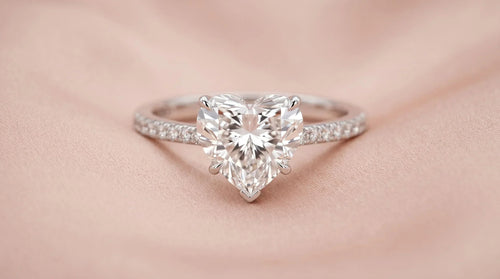
While Cut determines light performance (sparkle), Shape determines personality — the silhouette that defines the ring's character and is the first thing noticed from across the room. For the complete technical and stylistic guide to every shape, see our dedicated diamond shape guide.

Round Brilliant
The definitive classic. 57 facets engineered for maximum light return. Universally flattering, works in every setting style, and has the deepest secondary market liquidity of any shape. Browse our round brilliant solitaire collection.
Oval & Pear
Elongated shapes are exceptionally popular in 2026 because they create two simultaneous illusions: a larger apparent size (more surface area per carat) and a longer, slimmer-appearing finger. Browse our oval cut collection. For Pear and Toi et Moi combinations, see our bespoke options.
Cushion Cut
Soft, rounded corners with either chunky brilliant facets or crushed-ice sparkle. The most romantic shape — with a vintage warmth that reads beautifully in yellow gold. Browse our cushion cut collection and our complete cushion cut guide.
Ideal Length-to-Width Ratios
- Oval: 1.35–1.50 (classic elegant oval)
- Emerald Cut: 1.30–1.45 (traditional architectural rectangle)
- Pear: 1.50–1.70 (graceful teardrop)
- Marquise: 1.85–2.10 (maximum elongation)
- Radiant: 1.00–1.05 (square) or 1.20–1.35 (elongated)
Emerald & Asscher — The Step Cuts
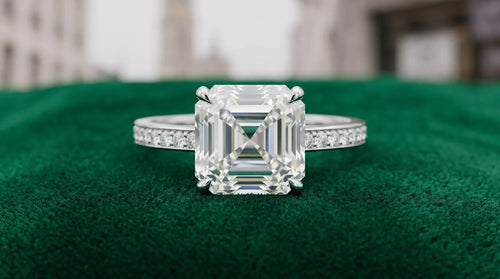
Long parallel facets create a "Hall of Mirrors" effect — deep, clear flashes of light rather than continuous sparkle. These are the shapes of confidence and architectural clarity. They require VS1 clarity minimum because the open table acts as a magnifying window. Browse our emerald cut collection and Asscher cut collection, and our detailed Emerald vs. Asscher guide.
08. The Architecture of the Setting
The setting serves two critical purposes: to hold the diamond securely for 50+ years of daily wear, and to present it in a way that maximises light entry and visual impact. A poor setting can make a great diamond look lifeless; a masterful setting makes a stone appear larger, brighter, and more alive.
The Solitaire: The ultimate classic. Four prongs expose maximum diamond surface; six prongs make the stone read rounder and provide slightly greater security. The foundation of every other setting style.
The Halo: A centre stone encircled by micro-pavé diamonds. Adds significant sparkle and creates the visual impression of a centre stone up to 0.50ct larger. The most popular engagement ring setting for clients who want maximum presence on a defined budget.
Three-Stone and Side-Stone Settings: A centre stone flanked by two matching side stones — symbolising past, present, and future. For step-cut side stones paired with a step-cut centre, see our step-cut guide. For the Toi et Moi style, see our dedicated guide.
The Invisible Setting (A Zizov Speciality): The pinnacle of diamond engineering. Precision grooves are cut into the underside of each diamond, which then slide onto hidden metal rails. The result: a seamless mosaic of brilliance with zero visible metal interrupting the light. For the complete technical explanation, see our invisible setting guide.

09. Precious Metals: The Complete Guide
The metal frames the diamond. It is not just about colour — it affects durability, maintenance, and how the stone's colour reads. For the complete technical breakdown of every metal alloy, see our metals guide.
Platinum 950: The king of metals for engagement rings. Naturally white, hypoallergenic, and denser than gold — you can feel its permanence. When scratched, the metal is displaced rather than lost, developing a satin patina that many connoisseurs prefer. Always polishes back to full shine. The premium choice for D–F colour diamonds and for clients who want never to re-plate.
18k White Gold: Yellow gold alloyed with white metals (palladium in the EU standard, ensuring hypoallergenic properties) and rhodium-plated for a crisp chrome-bright finish. Lighter than platinum, slightly less expensive, and requires rhodium re-plating every 1–2 years to maintain its white appearance — a routine service we provide at our atelier.
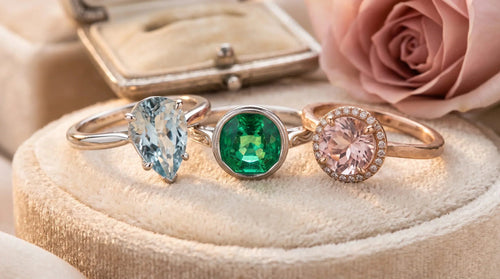
18k Yellow and Rose Gold: Both have returned to dominance in fine jewellery — offering warmth, a romantic vintage character, and a visual distinctiveness from the white metal mainstream. If choosing yellow gold, you can often drop one colour grade (I or J instead of G or H) because the warm metal absorbs and masks the diamond's body colour, saving meaningful budget without visual penalty.

10. Caring for Your Engagement Ring
A diamond is the hardest natural substance on earth — but it will still accumulate grease and body oil that progressively dulls its fire. For the complete care protocol covering all scenarios, see our care guide. The essentials:
- Weekly Cleaning: Soak your ring in warm water with a few drops of mild dish soap for 10 minutes. Use a soft baby toothbrush to remove oils and lotion buildup from behind the stone (where residue concentrates). Rinse and dry with a lint-free cloth. This weekly habit transforms the sparkle.
- Annual Prong Check: Visit our Antwerp atelier — or your local specialist — once a year for a professional inspection of prong integrity. A prong that has worn thin or bent slightly is invisible to the naked eye but represents a stone-loss risk. Prevention costs nothing; replacement costs significantly.
- Insurance from Day One: Specialist jewellery insurance covers theft, accidental loss, and damage. Ensure the policy specifies the exact quality parameters — not just replacement value — so you receive a like-for-like stone if the worst happens.
- Storage: Store your ring separately from other jewellery. Diamonds are hard enough to scratch other diamonds, and will certainly scratch softer stones and gold pieces. A fabric-lined individual box or a divided jewellery tray prevents contact damage.
11. Expert FAQ
Do you offer custom engagement rings?
Yes — and bespoke design is one of our core specialities. You work directly with our designers from a blank page: choosing the loose stone, sketching the setting concept, approving the 3D CAD render, and receiving a one-of-a-kind piece that no one else in the world owns. See our complete bespoke guide for the full process. Book a consultation at our Antwerp showroom to begin.
How long does the process take?
Collection rings are available immediately — some can ship via our express delivery service within 1–3 days. Bespoke commissions typically take 3–5 weeks from consultation to delivery. If you have a specific proposal date, tell us at your first conversation — we plan backwards from the date and will tell you honestly if the timeline is achievable.
Do I need insurance for my ring?
Non-negotiable. An engagement ring is typically one of the most valuable objects you own. Insure it from the moment you take delivery — not after the proposal. Our insurance guide explains exactly what documentation you need, what language the policy must contain, and how to ensure a like-for-like replacement if the worst happens.
How do I find her ring size secretly?
The most reliable method: borrow a ring she wears on her ring finger and bring it to our Antwerp atelier for measurement — we can size it in minutes and return it to you the same day. Alternatively, trace the inside of the band on paper. If this is not possible, her best friend or mother are the most reliable sources. All rings from Zizov include one complimentary resize within the first year — so an approximate size is always acceptable as a starting point.
Can I upgrade my diamond later?
Yes. Many of our clients begin with a certain size and return for a 5th or 10th anniversary upgrade — trading their original stone for full credit toward a larger or higher-quality diamond. We offer trade-in credit on all natural diamonds purchased from Zizov. The new stone can be set in the original setting or used as the foundation for a completely new bespoke commission. Contact us for current trade-in terms.
The Zizov Bespoke Experience
Buying an engagement ring should not be a transaction — it should be a memory. We are not a faceless e-commerce platform. We are a boutique atelier in the heart of Antwerp's Diamond District, working daily from the same trading floors where the world's finest rough diamonds are sorted, graded, and distributed.
When you book an appointment, you sit with a gemologist, not a commissioned salesperson. You handle loose stones. You look through the loupe. You see the difference between Excellent and Very Good Cut in real light, not in a grading description. We guide you through every decision so that when you get down on one knee, you have the absolute confidence that the ring in your hand is as flawless as the moment itself.

Ready to Find "The One"?
Let us guide you through the process in our private Antwerp showroom. No pressure — just expertise and exquisite diamonds. Browse our engagement ring collection, our new arrivals, and our full diamond ring collection before your visit.
Book Private AppointmentZizov Diamonds Antwerp
Excellence in every facet.